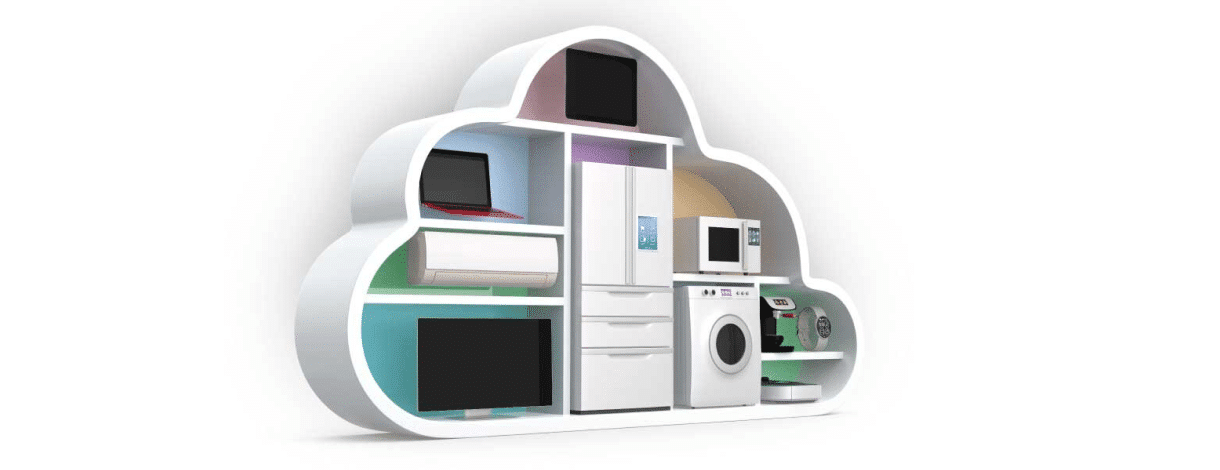
The Internet of Things connects many different devices into a large network, through which they exchange information with each other or with other applications. An IoT solution can be used with a cloud as a data processing centre. Cloud computing makes it possible to facilitate the scalability and external networking of IoT applications, increase their performance and reduce costs.
IoT in the Cloud?
Why does IoT make sense in the cloud?
Thanks to cloud computing, the scalability of applications can be significantly increased. Resources such as computing power or storage space can be flexibly increased or reduced. This leaves more room for manoeuvre in the planning and design of the architecture for IoT applications. The IoT solution also benefits from the performance of the cloud and the flexible cost model.
Here are 6 reasons why you should use IoT in the cloud:
- Scalability: The cloud offers almost unlimited resources to process data from a large number of IoT devices. This allows companies to easily expand their IoT ecosystem as their needs grow.
- Flexibility: By utilising cloud services, companies can respond quickly to changing requirements. They can easily add new features, upgrade or scale existing services to keep pace with the growth of the IoT network.
- Centralised management: The cloud enables centralised management of all IoT devices and data. This makes it easier to monitor, manage and update devices without the need for physical access to them.
- Data analysis and processing: The cloud offers powerful tools and services for analysing and processing IoT data in real time. Organisations can use advanced analytics algorithms to gain insights from the collected data and make informed decisions.
- Security: Cloud platforms invest heavily in security measures and protocols to ensure data integrity and confidentiality. By utilising cloud services, companies can ensure that their IoT data is protected from threats.
- Cost savings: Utilising cloud services eliminates the need for companies to operate their own infrastructure for data processing and storage. This can lead to significant cost savings as companies only pay for the resources they actually use.

Ready for the cloud?
Are you unsure whether the cloud is the right place for your software?
Together we will analyse your individual situation and offer you a step-by-step guide that will make your migration much easier!
Fast. Competent. Uncomplicated. Secure.
Has soxes moved IoT solutions to the cloud?
Yes, even in the development of the digitalised measurement and information system for windows, doors and gates for myPortaNet, for example, soxes relied on a cloud solution. The sensors on windows and doors are connected to the cloud via a low-power/wide-area network and constantly send updates about the status of the respective physical component. The system can be installed in a variety of environments thanks to the cloud architecture. MyPortaNet takes the pulse of the times and is just one of many examples of the use of IoT in conjunction with the cloud.
You will receive clear criteria for making your decision and a tried-and-tested process for ensuring that your cloud migration is secure and predictable.
The migration of software to the cloud is more than just a technical change. It is a strategic transformation that requires expert support.
More and more companies are deciding to move to the cloud. But what advantages does it offer and what are the arguments for a change? A question of cost One of the main arguments for moving to the cloud is the cost issue. Large cost centres such as electricity consumption, procurement or maintenance and operation of IT infrastructures can be minimised. With the so-called hyperscaler clouds from Google, Amazon and Co., far lower hosting prices can be offered than with smaller competitors thanks to economies of scale. This also applies to issues such as security and availability. And what should companies pay attention to? However, there are factors such as legal requirements for data residency or latency times for data interfaces that make the use of data centres outside of Switzerland difficult, if not impossible. For example, with complex IoT or Industry X.0 applications, high latency times can stand in the way of stable and fast operation. High latency times occur, for example, when external software components communicate with the cloud over long distances or the application runs across several data centres. By reducing the physical distance between data centres, the risk of high latency times can be significantly reduced. This is why the market share of local providers is also steadily increasing and more and more large cloud hosting providers are expanding their computing network to include the Swiss location. This development makes the switch to the cloud even more attractive for many companies. However, not all companies are willing to operate their application in a public cloud. For example, because this is associated with increased risks in the management of confidential data. The hybrid cloud addresses this problem. In a hybrid cloud, only certain parts of the application are operated on a public cloud, all remaining components are positioned in the private cloud or in the company's own data centre. But who should go to the cloud? Ultimately, the question of whether a switch to the cloud makes sense for a company must be answered based on many factors. In-house IT infrastructure is becoming increasingly inefficient and therefore more expensive. The cost of operating your own data centre is many times higher than relying on computing power from the cloud. Not least because you need to have a large amount of expertise in the company, which is not necessary when using the cloud. The flexibility gained through the cloud also enables companies to drive innovation. On the downside, risk aspects and latency times are possible obstacles to the adaptation of the cloud. Given the complex issues, it is worthwhile to obtain expert opinions for the specific company situation. With many years of experience in the field of cloud, soxes supports companies in the decision-making and implementation process of cloud applications.


Our expertise and experience help you understand the impact and opportunities of cloud integration and make the best decisions for a long-term IT strategy.
A move to the cloud is not only a technological necessity, but also a strategic decision to remain competitive. In this article, we explain how, when and why a cloud migration should take place.
Azure is a cloud computing service operated by Mircosoft. Azure is used to build, test, deploy and manage applications and services through Mircosoft managed data centres. Azure can be used for Software as a Service (SaaS), Platform as a Service (PaaS) and Infrastructure as a Service (IaaS) and supports a wide range of programming languages, tools and frameworks. Why does soxes use Azure? With cloud computing services such as Microsoft Azure, companies can deploy and manage their applications on a large global network. By using cloud computing, the costs for IT infrastructure can be kept to a minimum. If necessary, resources such as storage space or computing power can be expanded without limitation and without having to make large physical investments. Where did soxes use Azure? As a custom software developer, soxes covers the complete cycle from conception to system integration and maintenance of a project. When creating concepts for projects, it is important to find the right integration method for a company. soxes has a lot of experience in delivery through cloud computing and therefore has the ability to find the best solution for each customer. As one of many exemplary projects, the MyPortaNet application works entirely from the cloud.