
The 6 biggest risks of production systems

A single failure of your Delphi or Access software can turn into the most expensive production downtime of the year in a matter of minutes.

  • According to an ABB study, downtime because of industrial software costs an average of EUR 147,000 per hour and often significantly more.
  • A lack of monitoring means that failures are only noticed once machines have already stopped.
  • Every adjustment takes longer because fewer and fewer developers are proficient in Delphi or Access.
When «stable» suddenly becomes expensive

Many production systems have been running on Delphi or Access applications for years, reliably controlling machines and delivering data to ERP or MES. But this stability is deceptive: in many cases, these are systems that have grown over decades.

Risks remain invisible until it is too late. A failure of production software does not just mean IT problems. It directly jeopardizes delivery capability, product quality, and the entire value chain. It is therefore crucial for production managers to be aware of these risks and actively manage them.

According to the ABB study «Value of Reliability,» unplanned downtime costs German industrial companies an average of EUR 147,000 per hour. A two-hour outage can quickly result in costs in the hundreds of thousands or even millions, depending on the machinery, production value, and product line. If your production is down for 10 hours, the cost would be approximately EUR 1.47 million. That’s just for the outage itself, without follow-up costs such as scrap or delays.

Robert Schmuck, CTO soxes AG

Robert Schmuck, CTO soxes AG

A quick fix solves one problem today, but often creates three new ones for tomorrow. We prefer to rely on a plan that will still be viable in five years’ time.

An overview of the 6 biggest risks

Risk 1: Unplanned downtime

Delphi and Access applications were often developed for stable processes, not for dynamic production environments. As soon as interfaces to ERP or MES become unstable or a faulty update is installed, the entire line can come to a standstill.

Such downtime causes high production downtime. Depending on the industry and production volume, each hour can mean losses in the five- to six-figure range.

Risk 2: High follow-up costs due to failures

A production stoppage is expensive, but the follow-up costs are often even higher. If an Access application that transfers production data to the ERP fails, incorrect or missing entries occur. This leads to manual corrections, special transports, and overtime.

Risk 3: Quality risks

In modern production systems, automated testing and monitoring ensure that incorrect data or process deviations are detected immediately. This level of security is lacking in old Delphi or Access systems.

An incorrect parameter, an incomplete data record, or an interface error can render entire production batches unusable. This not only means high material and disposal costs, but also direct damage to the trust of customers and auditors.

Risk 4: Risks for supply chains and customers

Today’s production systems are closely linked to the supply chain. If data from a Delphi or Access application is not reliably transferred to the ERP or MES, the entire delivery planning process is thrown into disarray.

This can result in delayed deliveries, contractual penalties, or even the loss of important customers.

Risk 5: Limited further development

Further development is often only possible with great effort, if at all. This creates a competitive disadvantage: while other companies are digitizing and optimizing their production, your own system remains static. Competitiveness declines and costs rise.

Risk 6: Shortage of skilled workers and dependency

The number of experts who are proficient in Delphi or Access is dwindling. Every adjustment takes longer, costs more, and depends on a few individuals.

When a developer leaves the company, valuable know-how is left unsecured. Without targeted knowledge and documentation, there is a risk of complete standstill as soon as a small adjustment is necessary.

soxes is your partner for legacy software support and combines Delphi expertise with .NET, Python, PostgreSQL, and cloud solutions for companies from various industries.

The consequences for your company

  • Financial

    Production downtime can lead to direct losses in the six-figure range.

  • Strategic

    A lack of further development blocks innovation. While competitors use data to optimize processes, your systems remain static.

  • Regulatory

    Outdated software jeopardizes certifications such as ISO 27001 or industry-specific standards (e.g., GMP in the pharmaceutical industry).

  • employee commitment

    Young developers don't want to work with outdated technologies. If there is a shortage of skilled workers, your company will remain dependent on a small number of experts.

The solution: Risk Check

Instead of ignoring these risks, we recommend a structured risk check. This will give you a clear analysis of your production software and a plan of action for the coming years.

Our approach at soxes:

  • Code review: Identify technical security gaps
  • Documentation structure: Secure knowledge and reduce dependencies
  • Backup and restore test: Protect against disaster scenarios
  • Monitoring: Detect errors early on
  • Patch and upgrade plan: Regularly update and secure systems
  • Priority list: Clearly define immediate measures and long-term modernization

You reduce risks, ensure the stability of your production, and gain time to implement a planned modernization based on .NET, Python, cloud, or modern ERP/MES interfaces.

Use Case: Delphi

  • Use Case: Delphi
  • 166,000 lines of code, one developer

  • 1 Project Overview

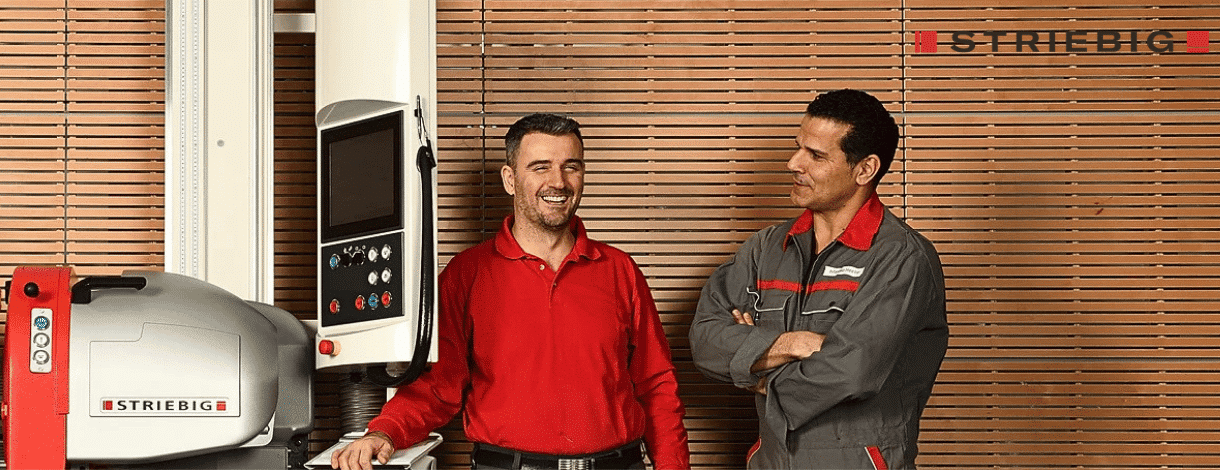
    Striebig AG is the global market leader for vertical panel saws. The saw software is directly connected to the machine, has been in use for many years and must remain reliably supported for around the next 15 years.

  • 2 Challenge

    The Delphi application is product relevant, historically grown and includes around 166,000 lines of code. Much of the knowledge was held by one person, while documentation and dependencies had to be reconstructed.

  • 3 Solution

    soxes gradually took over the source code, development environment and build process. The application was analysed, made executable, documented and transferred to a versioned repository.
  • 4 Result

    Striebig can continue to operate its critical legacy software in the long term. Knowledge, dependencies and technical risks are documented, initial bugs have been fixed and future support can be planned in a structured way.

Frequently asked questions

  • How can I avoid downtime in production?

  • Can an Access database be integrated into a modern ERP or MES?

  • How long can a Delphi or Access application still be operated?

  • How much does it cost to modernize production software?

  • Which modules should be modernized first to reduce downtime?

  • What security vulnerabilities are typical in old Delphi applications?

  • When does switching from Access to SQL Server pay off?

  • Who provides maintenance and support for old Delphi applications in Switzerland?

Talk directly to our experts and get your risk analysis!

Identify hidden vulnerabilities before they cause costly production downtime.

  • Analysis of code, interfaces, and backups
  • Clear priority list with concrete action steps

This might interest you

Contact

Do you have any questions? Would you like to find out more about our services?
We look forward to your enquiry.

Sofia Steninger

Sofia Steninger
Solution Sales Manager