
Examples of artificial intelligence

Artificial intelligence (AI) has long been a part of our daily lives. It’s found in search engines, translation tools, navigation systems, spam filters, voice assistants, and, increasingly, in business processes.

In this article, we’ll show you 14 concrete examples of artificial intelligence. You’ll learn where AI is already being used today, how companies benefit from it, which applications are particularly relevant for SMEs, and how AI developers at companies like soxes are helping to advance this technology.

Do you need an AI strategy for 2026? We’d be happy to help you create and implement one!
Artificial Intelligence: Definition

Before we look at specific examples of artificial intelligence in everyday life, let’s first clarify what is meant by the term AI:

“Artificial intelligence” (AI) refers to the attempt to create human-like intelligence in computer systems and applications. The goal is for machines to learn to solve problems and make decisions on their own, while constantly learning new things—much like humans do. Learn more about AI on Wikipedia.

See also“How Does AI Work?” for more on AI and deep learning.

First, here are some very common applications of AI:

1. AI in search engines

A common example of artificial intelligence is search engines like Google or Bing. By using AI technologies such as RankBrain and the BERT update, these search engines can respond more precisely to users’ needs and optimize search results accordingly. Microsoft Copilot and Google Gemini are already in widespread daily use. In the spring of 2025, Google activated “AI Overviews” above many search results, and in the fall of 2025, it also launched the “AI Mode” feature in Switzerland.

This takes into account, for example, natural language and the relationships between search terms to continuously improve the relevance and accuracy of search results.

2. Recommendation Algorithms and Personalized Advertising

AI is also used in recommendation algorithms by streaming services such as Netflix, YouTube, and Amazon Prime, as well as on social media platforms like Facebook, Instagram, and TikTok. By analyzing user behavior and preferences, these platforms can display personalized recommendations and ads tailored to users’ individual tastes and interests.

3. Voice assistants and smart homes

One of the best-known examples of artificial intelligence is voice assistants like Alexa, Siri, or Google Assistant. These AI-based applications can respond to voice commands and perform various tasks, such as playing music, controlling smart home devices, or answering questions. In doing so, they are constantly learning and improving their ability to understand natural language and provide appropriate responses.

4. Facial Recognition and Security

AI-powered facial recognition systems are used in various fields, such as unlocking smartphones, identifying individuals on surveillance cameras, or automated passport control at airports. Through continuous learning, these systems improve their ability to reliably recognize faces even under changing lighting conditions or when a person’s appearance changes.

5. AI Chatbots in Customer Service

AI chatbots automatically answer simple customer questions, find relevant information faster, and forward complex issues to the appropriate department. It is important that they are based on verified data and do not provide fabricated answers.

6. Navigation and Traffic Management

AI-powered navigation systems have become an integral part of our daily lives. They help us get from one place to another efficiently while avoiding traffic disruptions such as traffic jams, roadwork, or accidents. With the help of AI, navigation systems can constantly incorporate new data into their route planning and thus calculate the optimal path to the destination.

7. Music and Video Streaming

AI algorithms are also used in music and video streaming services like Spotify or YouTube. They analyze user behavior and preferences to create personalized recommendations and playlists. This allows users to discover new music and videos that match their tastes and interests.

8. Word Processing and Translation Programs

AI technologies are also used in word processing and translation programs like Google Translate. Through machine learning, these programs are able to deliver increasingly accurate translations that also take idioms and culture-specific expressions into account. AI is also used for auto-completion of text or predicting words and phrases in smartphone apps.

9. Autonomous Driving and Driver Assistance Systems

Finally, artificial intelligence plays a crucial role in the development of autonomous vehicles and driver assistance systems. AI systems in cars can be used, for example, for parking assistance, adaptive cruise control, or brake assist. They are also capable of processing traffic data in real time, thereby making driving safer and more efficient.

10. AI in Software Development

AI supports developers in writing, testing, and understanding code. However, the benefits only materialize when experienced professionals review the suggestions and integrate them seamlessly into existing systems.

Artificial intelligence (AI) is also increasingly influencing the business world. It optimizes processes, boosts efficiency, and unlocks new opportunities across various industries.

What has changed with AI 2026?

Today, AI is no longer just a single tool; instead, it is increasingly being integrated directly into existing work processes. This is particularly evident in search engines, office applications, customer service, document processing, software development, and data analysis.

For companies, therefore, the question of whether to use AI is becoming less important. What matters is where AI delivers real value, what data is available for that purpose, and how the solution can be securely integrated into existing systems.

Here are a few examples of how AI is used in businesses: 

In business, AI is particularly valuable in areas where large amounts of data, repetitive tasks, and complex decisions converge. This applies not only to large corporations but also to small and medium-sized enterprises (SMEs) in industries such as manufacturing, food production, retail, logistics, finance, and healthcare. Typical areas of application include quality control, document review, customer service, data analysis, knowledge management, planning, forecasting, and process automation.

1. Artificial Intelligence in Food Production

A concrete example of AI and machine learning in action can be found at the Emmi Group, one of the world’s leading manufacturers of dairy products. In collaboration with soxes, an AI application was developed that is capable of detecting errors in the production chain of its yogurt products.

The system, which is based on Microsoft Custom Vision technology, checks whether the correct lid has been placed on the corresponding yogurt cup. The check is performed by capturing images of the lids, which are forwarded to an application. If the application detects a mismatch between the product and the lid, it sends a signal to the camera, which stops the production process.

2. Financial Services and Fraud Detection

Artificial intelligence is also being used in the financial services sector. UBS uses AI to improve its financial services. For example, AI-powered algorithms are used to optimize investment strategies and provide customers with personalized investment recommendations. Additionally, UBS uses AI for fraud detection and prevention, as well as to automate compliance and risk management processes.

3. AI in Product Development

Companies like Procter & Gamble use AI to accelerate the product development process. AI-powered analyses of customer feedback and market trends help design new products that meet current customer needs. AI can also support the simulation of product usage and stress to test prototypes more quickly and cost-effectively.

4. AI in Human Resources

The company Assessment Gate uses AI to optimize the recruitment process. soxes has developed software that enables Assessment Gate to create a validated aptitude test with minimal effort, directly compare results, and obtain a highly accurate basis for decision-making. This solution is based on psychological knowledge, thorough data analysis, and artificial intelligence.

5. AI in the Pharmaceutical Industry

Roche makes extensive use of AI in the research and development of new drugs. AI algorithms analyze genetic data and clinical trials to identify new drug targets and evaluate the efficacy and safety of new therapies. This accelerates the development process and leads to more precise treatment methods.

Unleash your AI potential with our customised consulting package!

soxes offers you ONE-to-ONE consulting tailored to your needs, focussing on the individual opportunities and possibilities of your company.

We show you exciting possibilities and helpful solutions. Quickly, simply and competently.

Continue to the package
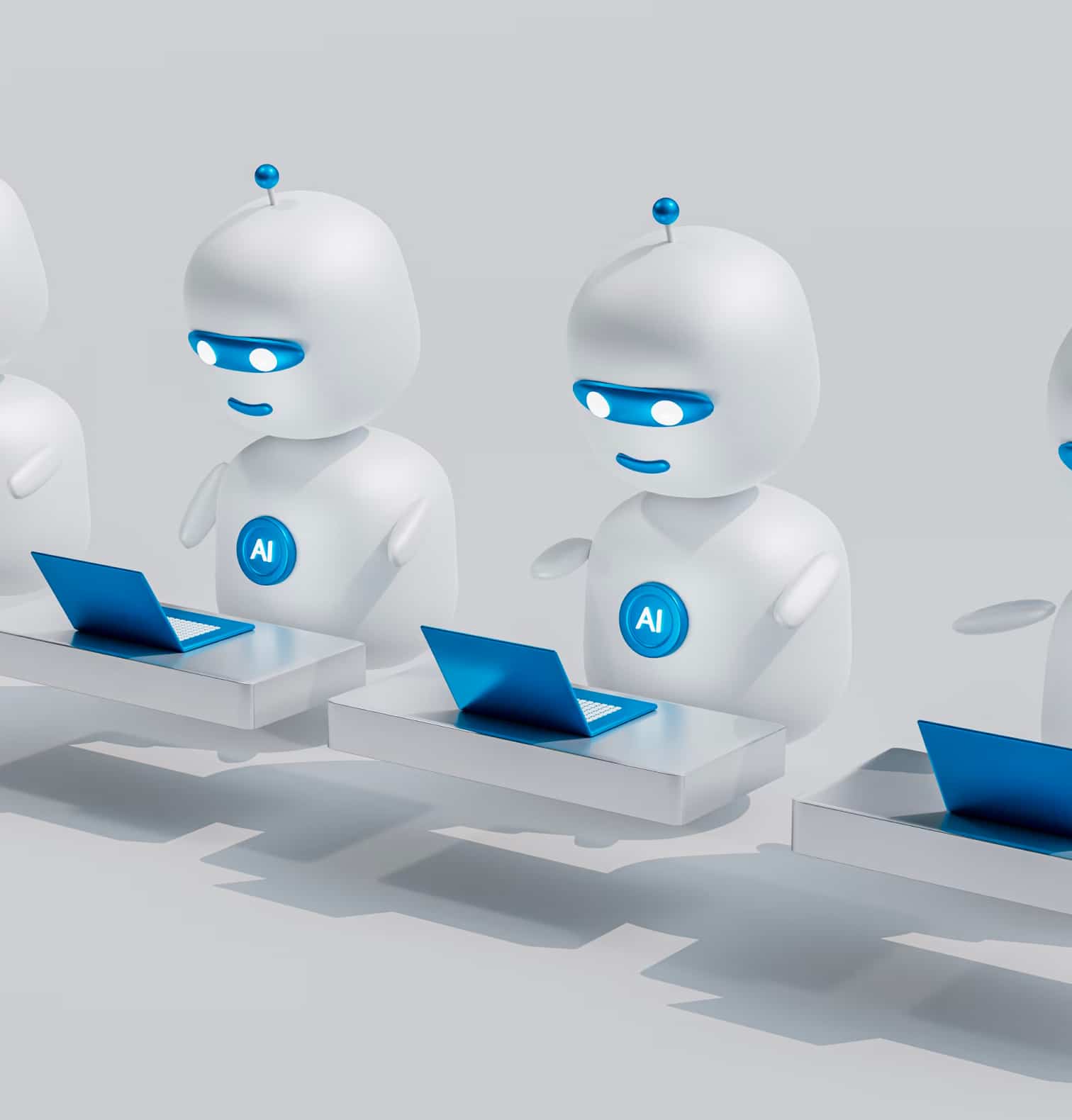
3D illustration of a row of friendly white AI robots working on blue laptops at small desks, symbolizing artificial intelligence consulting for business.

Conclusion

Artificial intelligence has long since become part of our daily lives and influences many aspects of our lives. Companies like soxes are helping to further develop AI technology and open up more and more areas of application. The examples listed show that AI already offers a wide range of possibilities for making our daily lives easier through digitalization and improving our quality of life. It will be exciting to see what other examples of artificial intelligence will shape our daily lives in the future.

We would be happy to advise you on how to use AI to increase efficiency in your company.

This might interest you

Contact

Do you have any questions? Would you like to find out more about our services?
We look forward to your enquiry.

Sofia Steninger

Sofia Steninger
Solution Sales Manager